Now scrolling: The Gettysburg Address

Four score and seven years ago our fathers brought forth on this continent, a new nation, conceived in Liberty, and dedicated to the proposition that all men are created equal. Now we are engaged in a great civil war, testing whether that nation, or any nation so conceived and so dedicated, can long endure. We are met on a great battle-field of that war. We have come to dedicate a portion of that field, as a final resting place for those who here gave their lives that that nation might live. It is altogether fitting and proper that we should do this. But, in a larger sense, we can not dedicate -- we can not consecrate -- we can not hallow -- this ground. The brave men, living and dead, who struggled here, have consecrated it, far above our poor power to add or detract. The world will little note, nor long remember what we say here, but it can never forget what they did here. It is for us the living, rather, to be dedicated here to the unfinished work which they who fought here have thus far so nobly advanced. It is rather for us to be here dedicated to the great task remaining before us -- that from these honored dead we take increased devotion to that cause for which they gave the last full measure of devotion -- that we here highly resolve that these dead shall not have died in vain -- that this nation, under God, shall have a new birth of freedom -- and that government of the people, by the people, for the people, shall not perish from the earth.

Friday, January 18, 2008

Douglass and King: What if they had traded places?


On this weekend celebrating Martin Luther King, Jr’s birthday, one wonders what things would have been like if King and Frederick Douglass had traded places. What if King had lived during the Civil War and been the one to advise Lincoln on matters of equal rights and emancipation? Would his thinking have been any different from Douglass’s?

Both men were African Americans in tune with their times and impatient for social change. Both were strong orators. Both had the ear of politically powerful people and became powerful in their own right. Both were anxious to have racial justice backed by law. There’s no question that Martin Luther King, Jr. would have been the Frederick Douglass of the 1860's.

But what about Douglass? Suppose he had been thrown into the politics of the Sixties? Would he have been the Martin Luther King, Jr. of that day? Even in his time, Douglass was concerned not just with racial equality, but with the emancipation of women – another radical idea. The Sixties would have suited him well with its air of new freedoms and he would have been right in step with the issues.

Which brings up the next thought. While Douglass escaped assassination in his day, would he have done so in the Sixties, or shared the same fate as the man who so resembled him? Hmm. There’s a choose-your-own-ending adventure here.

Interesting that these two powerful men rose up at crucial times when their talents and strengths were most needed to push forward racial justice causes. No one has quite illustrated the similarities between them the way they have with Kennedy and Lincoln, yet Douglass and King bear curious resemblances that tie in with the whole 100-year picture of repeated history.

Saturday, January 12, 2008

Portents on the First Month of the Year


It has been said that if you know how to spend January, you know how to spend the rest of your life.
Lincoln knew how to make the most out of January. Not only did he issue the Emancipation Proclamation on January 1st, 1863, he also welcomed the first African American to a White House New Year’s Day reception in 1864, and broke his engagement to Mary Todd on January 1st, 1841 -- probably the wisest decision he ever made.

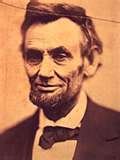
On January 8th, 1863, he appointed John Usher Secretary of the Interior, and on January 8th, 1864, he posed for this stunning photograph for Matthew Brady.

On January 17th, 1851, his father, Thomas Lincoln, passed away from a kidney ailment. Lincoln did not attend the funeral.

Saturday, December 29, 2007

On This Day in 1863, a Proclamation was Issued

Happy New Year. On this day in 1863, Lincoln issued the Emancipation Proclamation. He had informed his cabinet as early as July, 1862, that he intended to free the slaves in the Confederate states. However, his cabinet persuaded him to wait until a Northern victory because it would seem less like a desperate measure. Antietam served that purpose. Five days afterward, on September 22, Lincoln issued the first, or preliminary, Emancipation Proclamation.

The final proclamation, issued on January 1, 1863, freed the slaves only in the states that had rebelled: Arkansas, Texas, Mississippi, Alabama, Florida, Georgia, South Carolina, North Carolina, and parts of Louisiana and Virginia.
The president issued the proclamation under the powers granted during war to seize the enemies’ property. Ironically, Lincoln only had the authority to end slavery in the Confederate states, and then the slaves were freed only as the Union armies made their way throughout the South. In the states remaining loyal to the Union, slavery was protected by the Constitution. Slavery was only completely abolished in the United States by the 13th Amendment to the Constitution, which was ratified in 1865.
Many see the Emancipation Proclamation as a political statement only, since it did not immediately free any slaves. However, it is questionable that the 13th amendment would have come about at all if the the goal of the Civil War had not been so eloquently redefined by this single most important document.
In its wake, black soldiers were accepted on an equal par with their white colleagues. By the end of the war, some 200,000 freed Blacks had enlisted as soldiers and sailors in the Union army and navy.

Friday, December 21, 2007

Merry Christmas from the Lincoln White House, even if it is 140 years too late


This portrait is actually Lincoln's last reception at the White House and has nothing to do with Christmas. But isn't it festive looking? I like it a lot.

It's never too late to celebrate Christmas with Abraham Lincoln. He lives in our hearts forever, like the baby born in the manger on this day. May the joy and peace of the season be yours throughout the year.

And if you're looking for a terrific Lincoln place to visit, try the Logan County Courthouse. It was placed on the National Register December 24, 1985, and here is a great website about it.

Friday, December 7, 2007

Lincoln's address at Cooper Union targets the expansion of slavery


The Cooper Union Address was among the earliest of Lincoln’s speeches denouncing slavery and its expansion into Western territories. Not as popular as his other writings because of its length and detailed examination of the Constitution (Herndon compared it to a lawyer’s brief), it is perhaps the least understood, yet most politically crucial speech of Lincoln’s career.
In it, Lincoln examines the views of the 39 signers of the Constitution and notes that a majority of 21 of them believed Congress should control slavery in the territories, not allow it to expand.

Exposing the inconsistent positions of Senator Stephen Douglas and Chief Justice Roger Taney, Lincoln urges fellow Republicans not to give in to Southern demands to recognize slavery as being right, but to "stand by our duty, fearlessly and effectively."

Though he delivered the speech in February of 1860, Lincoln accepted the invitation to write it in October of 1859. It was originally intended to be a lecture at Henry Ward Beecher’s Church in Brooklyn, but the Young Men's Republican Union, which assumed sponsorship, moved its location to the Cooper Institute by the time Lincoln arrived in New York.

The Union Board included members such as Horace Greeley and William Cullen Bryant, who opposed William Seward for the Republican Presidential nomination. As an unannounced presidential candidate, Lincoln attracted a capacity crowd of 1,500 curious New Yorkers.

Though Lincoln disappointed spectators at first with his almost too-tall appearance, he soon electrified the crowd with his passion for all things anti-slavery. Some recognize that the long road to emancipation, which ended January 1, 1863, began here, February 27th, 1860, at Cooper Union.

Saturday, November 10, 2007

Kennedy was shot in a Lincoln


Happy Thanksgiving. Lincoln established Thanksgiving as a national holiday in a special proclamation.

This year it falls on the exact day Kennedy was assassinated, giving us all the more reason to explore the Kennedy-Lincoln connection. So, as promised, here’s the Kennedy-Lincoln blog celebrating the many and strange similarities between the two presidents and all things surrounding them. I’ll start with the numbers because I think they’re the coolest:

Abraham Lincoln was elected to Congress in 1846. John F. Kennedy was elected to Congress in 1946.

Lincoln failed to win the Vice Presidential nomination in 1856. Kennedy failed to win the Vice Presidential nomination in 1956.
Abraham Lincoln was elected President in 1860. John F. Kennedy was elected President in 1960. Lincoln defeated Stephen Douglas who was born in 1813. Kennedy defeated Richard Nixon who was born in 1913.
Lincoln's Vice President, Andrew Johnson, was born in 1808 and served in the House of Representatives in 1847. Kennedy's Vice President, Lyndon Johnson, was born 1908 and served in the House of Representatives in 1947.

Oswald was born in 1939. If you're going to say that Booth was born in 1838 – you’re right and you’re no fun.

And here’s some name stuff: The names Lincoln and Kennedy each contain seven letters.

Both assassins were known by their three names. Both names comprise fifteen letters.

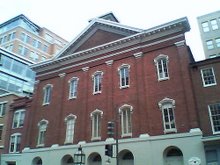
Lincoln was shot at Ford’s theatre. Kennedy was shot in a Lincoln made by Ford.

Booth ran from a theater and was caught in a warehouse. Oswald ran from a warehouse and was caught in a theater.

Kennedy had a secretary named Lincoln who warned him not to go to Dallas. Lincoln had a secretary named John who warned him – you guessed it – not to go to Ford’s Theatre.
Okay, there's more:
Both presidents were shot in the back of the head, in the company of their wives and another couple, on a Friday.

Lyndon Johnson had a rare pancreatic condition which was mistaken for cancer. Andrew Johnson had the same pancreatic disorder. (I can't prove this one but I know I read it somewhere. Can someone help me with this?)

And here's one more thing:
Lincoln was involved in a civil war between the north and the south in America. Kennedy had plans to withdraw American troops from yet another war between the north and the south – in Vietnam.

Several websites mention that Lincoln was in Monroe, Maryland two weeks before his assassination, and Kennedy was with Marilyn Monroe two weeks before his death. But not many people know that Marilyn Monroe was not only Kennedy’s mistress, she was an avid Lincoln fan.

Had enough yet? Does evil repeat every one hundred years?

For more coincidences than you ever wanted to know, check into the following websites: Lincoln-Kennedy Coincidences ; The Kennedy-Lincoln Connection ; Linkin' Kennedy.

Friday, November 2, 2007

Happy Veterans' Day from LincolnFreak

After all, Lincoln was a veteran of two wars. He was Captain of Volunteers in the Black-Hawk War for thirty days, then re-enlisted two more times in other units.

In the Civil War, he was Commander-in-Chief of the Army of the Republic, and the only president to come under fire in active battle at Fort Stevens.

He was so fond of visiting the soldiers' home that a kidnapping plot was designed to take place there. When it failed to materialize, Lincoln became one of the final casualties of the Civil War at Ford's Theatre.

The Gettysburg Address, his most famous speech, was as much about the common soldier as it was about the Nation's destiny.

Lincoln once said: "This extraordinary war in which we are engaged falls heavily upon all classes of people, but the most heavily upon the soldier. For it has been said, all that a man hath will he give for his life; and while all contribute of their substance the soldier puts his life at stake, and often yields it up in his country’s cause. The highest merit, then, is due to the soldier."

So if you're planning to visit the war memorials in Washington on November 11th, don't forget to stop by the Lincoln Memorial and say hi to an old veteran.