Now scrolling: The Gettysburg Address

Four score and seven years ago our fathers brought forth on this continent, a new nation, conceived in Liberty, and dedicated to the proposition that all men are created equal. Now we are engaged in a great civil war, testing whether that nation, or any nation so conceived and so dedicated, can long endure. We are met on a great battle-field of that war. We have come to dedicate a portion of that field, as a final resting place for those who here gave their lives that that nation might live. It is altogether fitting and proper that we should do this. But, in a larger sense, we can not dedicate -- we can not consecrate -- we can not hallow -- this ground. The brave men, living and dead, who struggled here, have consecrated it, far above our poor power to add or detract. The world will little note, nor long remember what we say here, but it can never forget what they did here. It is for us the living, rather, to be dedicated here to the unfinished work which they who fought here have thus far so nobly advanced. It is rather for us to be here dedicated to the great task remaining before us -- that from these honored dead we take increased devotion to that cause for which they gave the last full measure of devotion -- that we here highly resolve that these dead shall not have died in vain -- that this nation, under God, shall have a new birth of freedom -- and that government of the people, by the people, for the people, shall not perish from the earth.

Saturday, November 10, 2007

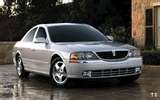
Kennedy was shot in a Lincoln


Happy Thanksgiving. Lincoln established Thanksgiving as a national holiday in a special proclamation.

This year it falls on the exact day Kennedy was assassinated, giving us all the more reason to explore the Kennedy-Lincoln connection. So, as promised, here’s the Kennedy-Lincoln blog celebrating the many and strange similarities between the two presidents and all things surrounding them. I’ll start with the numbers because I think they’re the coolest:

Abraham Lincoln was elected to Congress in 1846. John F. Kennedy was elected to Congress in 1946.

Lincoln failed to win the Vice Presidential nomination in 1856. Kennedy failed to win the Vice Presidential nomination in 1956.
Abraham Lincoln was elected President in 1860. John F. Kennedy was elected President in 1960. Lincoln defeated Stephen Douglas who was born in 1813. Kennedy defeated Richard Nixon who was born in 1913.
Lincoln's Vice President, Andrew Johnson, was born in 1808 and served in the House of Representatives in 1847. Kennedy's Vice President, Lyndon Johnson, was born 1908 and served in the House of Representatives in 1947.

Oswald was born in 1939. If you're going to say that Booth was born in 1838 – you’re right and you’re no fun.

And here’s some name stuff: The names Lincoln and Kennedy each contain seven letters.

Both assassins were known by their three names. Both names comprise fifteen letters.

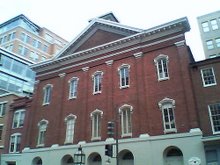
Lincoln was shot at Ford’s theatre. Kennedy was shot in a Lincoln made by Ford.

Booth ran from a theater and was caught in a warehouse. Oswald ran from a warehouse and was caught in a theater.

Kennedy had a secretary named Lincoln who warned him not to go to Dallas. Lincoln had a secretary named John who warned him – you guessed it – not to go to Ford’s Theatre.
Okay, there's more:
Both presidents were shot in the back of the head, in the company of their wives and another couple, on a Friday.

Lyndon Johnson had a rare pancreatic condition which was mistaken for cancer. Andrew Johnson had the same pancreatic disorder. (I can't prove this one but I know I read it somewhere. Can someone help me with this?)

And here's one more thing:
Lincoln was involved in a civil war between the north and the south in America. Kennedy had plans to withdraw American troops from yet another war between the north and the south – in Vietnam.

Several websites mention that Lincoln was in Monroe, Maryland two weeks before his assassination, and Kennedy was with Marilyn Monroe two weeks before his death. But not many people know that Marilyn Monroe was not only Kennedy’s mistress, she was an avid Lincoln fan.

Had enough yet? Does evil repeat every one hundred years?

For more coincidences than you ever wanted to know, check into the following websites: Lincoln-Kennedy Coincidences ; The Kennedy-Lincoln Connection ; Linkin' Kennedy.

Friday, November 2, 2007

Happy Veterans' Day from LincolnFreak

After all, Lincoln was a veteran of two wars. He was Captain of Volunteers in the Black-Hawk War for thirty days, then re-enlisted two more times in other units.

In the Civil War, he was Commander-in-Chief of the Army of the Republic, and the only president to come under fire in active battle at Fort Stevens.

He was so fond of visiting the soldiers' home that a kidnapping plot was designed to take place there. When it failed to materialize, Lincoln became one of the final casualties of the Civil War at Ford's Theatre.

The Gettysburg Address, his most famous speech, was as much about the common soldier as it was about the Nation's destiny.

Lincoln once said: "This extraordinary war in which we are engaged falls heavily upon all classes of people, but the most heavily upon the soldier. For it has been said, all that a man hath will he give for his life; and while all contribute of their substance the soldier puts his life at stake, and often yields it up in his country’s cause. The highest merit, then, is due to the soldier."

So if you're planning to visit the war memorials in Washington on November 11th, don't forget to stop by the Lincoln Memorial and say hi to an old veteran.

Saturday, October 13, 2007

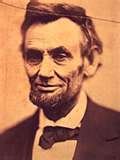
That fabulous face

Lincoln's opinions of his own looks were self-effacing enough. Once during a campaign, when accused of being two-faced, Lincoln remarked "if I had two faces, do you think I'd be wearing this one?"

But what did others think of Lincoln's face?

Poet Walt Whitman, often observing Lincoln on the streets of Washington, thought that the uniqueness of the President's face was never adequately captured with its "wonderful reserve, restraint of expression, fine nobility staring at you out of all that ruggedness..."

Democratic friend Orlando B. Ficklin recalled: "He could tell a story to make a group roar with laughter, but when his face was unlit by pleasantry it was dark, gloomy and peculiar. The pictures we see of him only half represent him, as they can only show him in repose."

Adjutant-General James B. Fry remarked: "His expression in repose was sad and dull; but his ever-recurring humor, at short intervals, flashed forth with the brilliancy of an electric light."

Biographer James G. Randall observed: "In Lincoln's eloquent face and in his manner of meeting there was the appeal of a friendly and magnetic personality."

Novelist Nathaniel Hawthorne, who visited the President in March 1862, said "the whole physiognomy is as coarse a one as you would meet anywhere in the length and breadth of the States; but, withal, it is redeemed, illuminated, softened, and brightened by a kindly though serious look out of his eyes, and an expression of homely sagacity, that seems weighted with rich results of village experience. A great deal of native sense; no bookish cultivation, no refinement; honest at heart, and thoroughly so, and yet, in some sort, sly."

Robert B. Stanton, who as a teenager often saw Lincoln at the White House, remarked about his features: "There was a something that came out from behind them, and spoke not in words, but shone and spoke through them by means of them, and turned them all into real beauty. And in all these moods, first or last, that spirit of beauty which I saw spread over his whole countenance and drew one to him as by the power of magic."

Want to hear more about Lincoln's face? Check out "Lincoln's beautiful face" at the Lincoln Classroom.

Sunday, September 30, 2007

I've been working on the railroad: the fighting in Maryland


Keeping the railroad running was crucial to the success of Lincoln’s agenda. The Baltimore and Ohio Railroad was the Union’s main supply line to Wheeling on the Ohio River and to the West.

Lincoln’s "silent partner" in all this was none other than Johns Hopkins, founder of the university and hospital at Baltimore. Hopkins, Financial Director of the B&O, along with its President John Work Garrett, went to great lengths to keep the Railroad running during the Civil War.

A Maryland banker and financier, Hopkins was also an abolitionist and supporter of Lincoln in a state which did not vote for Lincoln as the US President. One of the first campaigns of the Civil War was planned at his summer estate, Clifton. At the beginning of the Civil War, Hopkins wrote a letter to Lincoln, requesting the President to keep troops under the command of General John Ellis Wool stationed in Maryland. Johns Hopkins signed this letter "your servant" and "friend" and it can be found in the holdings of the Library of Congress.

It’s no coincidence that much of the fighting in Maryland followed the B&O Railroad stops: Cumberland, Havre de Grace, Union Mills, etc. Realizing its crucial importance to the Union’s success, no fewer than nine Confederate military leaders sought to capture or shut down the B&O, including Stonewall Jackson, Jubal Early, Turner Ashby, John D. Imboden, Albert G. Jenkins, William F. Jones, John S. Mosby, Major Harry Gilmor and John H. McNeill.

Famous raids involving the B&O included "The Great Train Raid of 1861" ; the "Martinsburg Train Raid" and "Leesburg Train Raid," both in 1861 ; the "Romney Expedition" in 1862, the "Jones-Imboden Raid" in 1863 ; and the "Battle of Monocacy," and "Gilmor’s Raid," both in 1864.

Whew. No wonder those railroad men were tired.

To find out more about the life of Johns Hopkins, check out this great Wikipedia article: http://en.wikipedia.org/wiki/Johns_Hopkins. For info about John Work Garrett, see: http://en.wikipedia.org/wiki/John_Work_Garrett, and for more about the B&O Railroad, check this out: http://en.wikipedia.org/wiki/Baltimore_and_Ohio_Railroad

Sunday, September 16, 2007

Battle of the Monocacy makes for "Desperate Engagement"


I’ve just finished reading a terrific book about the Battle of the Monocacy by Marc Leepson, called "Desperate Engagement." The battle, fought between Jubal Early and Lew Wallace of Ben Hur fame, took place four miles South of Frederick, Maryland. Early, who was on his way to threaten the Union capital in Washington, D.C., was ordered to engage Wallace at Frederick to divert Union troops from Lee’s advance. Early did not want to fight this battle, but he won it.


The controversy was that Jubal Early, after his victory over Wallace, should have advanced toward Washington without delay. According to Leepson, Washington was poorly defended at the time by "invalids and bank clerks." Instead, Early chose to rest his army which had been on the march since June 13th, allowing Grant to send thousands of reinforcements to the capital. When Early did attack, he was defeated.

Lincoln, who was visiting Fort Stevens in Washington at the time, became the first and only President to come under fire in active battle. Standing on the parapet of the fort, his tall frame an easy target, he was enjoying the spectacle of bullets whizzing past him until an officer in charge chewed him out and insisted he take cover. Check out the picture I found of the plaque dedicated to Lincoln for remaining at Fort Stevens under fire. I think it’s all pretty cool.


Leepson makes a convincing case for the early advance of Early. However, since being an armchair General is every history buff’s right, here’s LincolnFreak’s take on the subject: Early’s army had been thinned out by hundreds, and those remaining were wounded, exhausted and ill-fed. I think if he had attacked Washington without resting his men, he would have lost that battle anyway, bank clerks notwithstanding. Of course, there’s no way to know now.


Anyway, an interesting aside if you live in Baltimore – at one time Confederate troops were within 7 miles of Cockeysville. Today they’d be stuck in traffic on York Road. Also, if you visit the Monocacy battlefield in Frederick, you’ll see lots of impressive monuments, but the Lincoln plaque is at Fort Stevens

Saturday, September 8, 2007

Wisdom from the Mary Todd Lincoln School of Finance


If you’re the type to worry about budget cuts, take a tip from Mary Lincoln on how to survive rough times. While Abe was scrounging for funds to put coats on the backs of Union soldiers, Mary was playing her own version of ‘flip that house’ by redecorating with French wall paper and personalized china purchased on shopping trips to New York.

By 1864, she was in debt to the tune of $27,000 and pressuring officials for personal loans by sharing political secrets with them. Spies used to get shot for doing this kind of thing. When this tactic failed, she tried to acquire the salary of an employee who had left the White House by assuming her responsibilities and also assuming she would be compensated for her work – an early case of identity theft. When this failed, she simply started padding the expense account until her husband could be re-elected.

Abe’s methods of earning money were a little different. While Mary was away, he wrote her, "You’ll be happy to know I’ve put money into the treasury at 5% interest." How dull.

Actually, I love Mary. She gets a lot of bad press, but no First Lady was more colorful. By the way, if you’re wondering what Abe was doing while Mary was away, check out this undercover tape submitted to me, courtesy of Hammer28. http://www.jibjab.com/starring_you/receipt/545526

Sunday, September 2, 2007

September Song in the Life of Lincoln


The month of September offered many challenges for Lincoln during the Civil War. On September 2, 1862, Lincoln put McClellan in charge of defending the city of Washington. Putting McClellan in charge of anything was always risky business.

The Battle of South Mountain began on September 14, 1862, as part of the Maryland Campaign, with Antietam well overshadowing it in casualties on September 17, 1862.

Lincoln prepared the Emancipation Proclamation on September 22, 1862, many months before its signing on January 1, 1863.

One bright spot in the Civil War was the presentation of a Bible by a committee of African American citizens from Baltimore on September 7, 1864, in Washington. The inscription read: "To Abraham Lincoln, President of the United Sates, the Friend of Universal Freedom, from the Loyal Colored People of Baltimore, as a token of respect and Gratitude." The donors said "since our incorporation into the American family, we have been true and loyal." This must have been a consoling word to hear, since Baltimore was considered so volatile that the inaugural train would not even stop at the Calvert Street Station in 1861.

Of course, the Lincoln-Douglas debates were held September 15, 1858, and Lincoln advocated the repeal of the Kansas-Nebraska Act on September 2, 1854 in Jacksonville, Illinois. Still interested? No? Just wait 'til October gets here.