Now scrolling: The Gettysburg Address

Four score and seven years ago our fathers brought forth on this continent, a new nation, conceived in Liberty, and dedicated to the proposition that all men are created equal. Now we are engaged in a great civil war, testing whether that nation, or any nation so conceived and so dedicated, can long endure. We are met on a great battle-field of that war. We have come to dedicate a portion of that field, as a final resting place for those who here gave their lives that that nation might live. It is altogether fitting and proper that we should do this. But, in a larger sense, we can not dedicate -- we can not consecrate -- we can not hallow -- this ground. The brave men, living and dead, who struggled here, have consecrated it, far above our poor power to add or detract. The world will little note, nor long remember what we say here, but it can never forget what they did here. It is for us the living, rather, to be dedicated here to the unfinished work which they who fought here have thus far so nobly advanced. It is rather for us to be here dedicated to the great task remaining before us -- that from these honored dead we take increased devotion to that cause for which they gave the last full measure of devotion -- that we here highly resolve that these dead shall not have died in vain -- that this nation, under God, shall have a new birth of freedom -- and that government of the people, by the people, for the people, shall not perish from the earth.

Thursday, July 26, 2007

Week 7, Thing #16: All Manner of Wikidness


What interests me most about a Wiki is the diversity of perspectives contributed. In the academic world, this used to be called “eclectic sources.” In a library setting, I think Wikis have their greatest potential for subject guides, book reviews and internal department manuals.

I also like the idea of setting up a library community website to feature “about town” restaurants and tourist sites within the area. Residents usually know the best places to frequent and can give you off-the-record advice that official travel sites may not be willing to offer. People love to contribute information about their community and usually are responsible about not submitting inappropriate comments.

Amazon’s book reviews are very helpful and for that reason I think a local, library book review site would be ideal. I’m interested to see what OCLC has to offer in the near future about including book reviews with their bib records. They have already done this to some extent with URLs linking to descriptions and publisher info.

Some department manuals are already set up so that members can add to them or alter them, and I know this has saved supervisors a great deal of time.

My only concern with contributing research work to a subject guide is that inaccuracies can result. I still say you are more responsible when you have to sign your work rather than submit it anonymously, although “Diary of a Librarian” reminded me that they can always trace your IP address.

Bring on the wikis.

Tuesday, July 24, 2007

Week 6, Thing #15: What Web 2.0 Means to Me


To me, Web 2.0 means a further expansion of technology to better serve library patrons and to give them more personal freedom and options in accessing materials without the need to enter a library building, or request a librarian. This does not mean that a librarian's skills will become obsolete, only redefined.

Some thirteen years ago, Baltimore County Public Library made a decision that it was in the information business, not just the book business. The library redefined itself in broader terms as a prelude to installing internet computers for public use in the branches. At the time, it was considered a gamble. Now those computers are constantly busy, with patrons waiting in line to sign up for them.

At about the same time, we started an online catalog, gradually phasing out the physical card catalogs in the branches while retaining only one main card catalog at Administrative Offices as a "backup." Again, it was considered a risk. Now even the card catalog "backup" is gone. We have been fully online for years and have never looked back.

So when I read Rick Anderson proposal that libraries might one day eliminate most or all physical collections in favor of a totally online environment with Web 2.0, I am open to the idea, though again, it seems like a risk.

Already certain reference works are strictly online-accessible through websites, with cumbersome books disappearing such as Valueline, Lexis Nexis and some Maryland State reference sites. Such sites are easy to update on a daily basis, and now with cell phones able to access the internet, are more available than ever. So Web 2.0 seems to be the inevitable outcome of a long series of decisions to pool information online.

I especially enjoyed reading Chip Nilges’s updates on OCLC’s future as part of Web 2.0. I have watched that database grow from a simple supplier of bib records to an online conglomerate providing everything from translation services to Interlibrary Loan. I was especially impressed with the ability to use tags and place delimiters in subject headings to create a kind of Mappr graphics for patrons. The possibilities are endless.

There are, of course, always setbacks to technology. E-books and audiobooks have had some access problems. Also, the social environment of the library could suffer, as discussed by Dr. Wendy Schultz, or it could simply change to meet computer-based needs. Current computer popularity at the library might also mean that many still don’t have computer access at home, and might be overlooked as patrons in a library without walls.

Nevertheless, I am optimistic that libraries in general have a keen sixth sense about when it is time to discard print collections and shift to complete online resources, based on the community they serve and the funding at their disposal. I am hopeful that a library without walls, making use of the many options Web 2.0 offers, and flexible enough to provide service to users at home or anywhere, will be just as welcomed and even more widely accessed than the physical libraries of today.

Wednesday, July 11, 2007

Week 6, Thing #14: Claiming Lincoln on Technorati


Four score and seven blogs ago I said I probably would not be using Technorati because of the extensive information pulled in on keyword. Now I've claimed my blog on Technorati, tagged it, and I have a great looking Fave button on my blogsite. Unbelievable. I wish all my predications were this accurate.
This has been one of the most adventurous, informative and social exercises so far. Checking out the favorites on Technorati was easy and great fun. Boing, Boing, YouTube and Engadget seem to be popular everywhere I look. I can see why. YouTube was my favorite. Of course, I had to stop and watch the cat video. Thanks to BluffingWildly, I also saw great jazz performances by Cab Calloway and Billie Holiday on YouTube. No wonder this thing is so popular. Amazing.

I have yet to fill in a picture and profile. My site is still "under construction" on Technorati. But hey, there are over 49,000 hits for Abraham Lincoln in this database and I've only started exploring them. Tag is still the most concise search, bringing up some 16 hits for Lincoln bloggers as opposed to the 49,000 keyword haul.

So stay tuned to the blog directory for everything in the world about LincolnFreak. I saw some colleagues and friends on Technorati as well. Yes, Periodic Frippery, this means you.

Sunday, July 8, 2007

Week 6, Thing #13: Playing tag with Del.icio.us

Del.icio.us is the greatest resource I've worked with yet. I set up an account with them and downloaded their button and tag to my Explorer toolbar. Then I searched Lincoln and started bookmarking some very fine websites from the Del.icio.us database. I stopped at 11, but intend to add more as soon as possible.

The great thing about Del.icio.us is that you connect with sites chosen by others who have the same interests as you. When you click on the "saved by 5 other people" tag (the number varies), you get the webnames of those people, and the lists of sites bookmarked by them. Hence the social aspect of this resource. You can copy URLs of special interest from their lists. You can narrow your search by selecting only the "history" tag on somebody's list and getting even more specific hits. It really is a wonderful way to expand your own research. It's as if somebody else has done a lot of the work for you before you even start doing your homework.

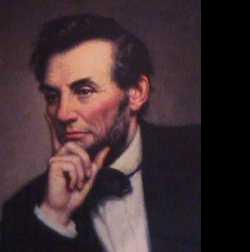
I liked these new Lincoln sites so much, I added them to my Rollyo list. Then I moved the Rollyo search box to the top of my page, just under Lincoln's picture, which one person thought looked like Leonard Nimoy.

I also added three or four of these websites as new links on my page. And I'm going back to Del.icio.us to get more. What a great idea to have a simple button available at the top of the Explorer page, rather than scrolling through a "favorites" list each time you want to find something.

I hope others will check into my list and share some of my bookmarked sites. I see this as a powerful research tool, because the information retrieved seems more specific in nature than the average internet search, and the choices increase when new members join.

Saturday, July 7, 2007

Week 5, Thing #12: Run over by a search engine


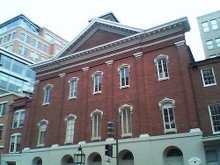
I learned a lot with this Rollyo exercise. I opened yet another account, chose five great sites I trusted, one of them Abraham Lincoln online, and started testing them out. The specific searches brought up good information (e.g., Ford's Theatre, Mary Todd Lincoln, Springfield). I was very pleased with Rollyo's results.

The more general word searches like "biography" brought up all kinds of sites I didn't want. I'm not sure where these other sites came from since my choices were specifically Lincoln, but who knows. Many thanks to BluffingWildly for convincing me not to ditch the whole thing and start over. I really like the sites I chose.

I also added the Rollyo search box to my blog, just above bookzilla. I thought red would dress the page up nicely, but had to settle for plain because I kept getting an error in the html whenever I chose red. I think the plain looks fantastic.

The possibilities with this kind of search are endless. You can literally create your own mini-internet taylor-made to your interests and find specific targets not as easily found on the bigger web. Also, not only can favorite websites be added as a link on your blogsite, but now they can be searched for information that may not be obvious on their homepages. Many websites contain their own links-ups with similar sites and all of these sources seem to come up in the Rollyo searches.

There were a lot of challenges to getting this search engine working, but it was worth it. Rollyo would be great for homework assignments.

Wednesday, July 4, 2007

Week 5, Thing #11: Lincoln booklist emerges from LibraryThing


Compiling a booklist using LibraryThing was a lot easier than searching an average online catalog. Even if I couldn't remember the exact title of a book, LibraryThing would pull it in for me from an approximation.

I chose the Amazon database instead of Library of Congress and obtained wonderful pictures of book covers along with titles. The list, however, was quickly becoming monstrous, so I limited my choices to 24 titles. I could have picked so many more. There is just so much on Lincoln worth reading.

So check out Bookzilla and Son of Bookzilla in the righthand column, just under the weblinks. Bookzilla will connect you with the complete display of my list on LibraryThing. Son of Bookzilla provides a random feed of 5 titles from that list to my blogsite.

LibraryThing is very user-friendly and provides not only the book you're looking for, but similar titles you may not have read. It's a great way to expand your future reading list.

Also, don't forget to check out "Reading the Man," a newly published collection of Robert E. Lee's letters, as well as Kwesi Mfume's book on the Emancipation Proclamation (not yet released).


Monday, July 2, 2007

Week 5, Thing #10: Roflbot says it all


Behold Roflbot, an online image generator designed to create a picture and text mock-up. Choose one of their own random photographs -- from adorable cats to Washington crossing the Delaware -- or pick a photo from the web, or -- as I did -- choose a picture from your own computer and write your own text to go with it. You can then position the text anywhere on the photo that you like and save it. Voila! An impatient Lincoln waiting for the end of it all so that he can be left in peace. Here is the Roflbot link http://wigflip.com/roflbot/. Or, you can find it on the great, endless menu provided by the Generator Blog. Look for the picture of George Bush watching television.

P.S. I created a meez. To see it, click on this link.http://www.meez.com/main.dm. I hope it is still alive and well. I had to install Javascript to activate it.